
By David Beveridge
Engineering leader, builder, and writer
Engineering leader, builder, and writer
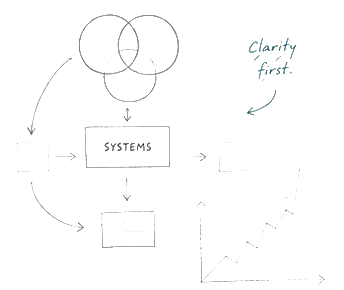
The most useful way to think about AI leverage inside engineering organizations is not as automatic headcount compression. It is as a way to improve decision quality, speed of iteration, and the amount of useful work a strong team can absorb.
A lot of AI discussion in software organizations collapses immediately into staffing math. That is understandable, but it usually produces low-resolution thinking. It assumes the main unit of value is keystrokes or ticket throughput, and that the main question is how many people those outputs should now require.
That frame misses where the best leverage often comes from. In most important engineering work, the bottleneck is not raw production volume. It is choosing the right problem, sequencing the work well, surfacing risks early, and keeping ambiguity from turning into thrash.
Used well, AI tools help teams externalize context, draft bounded artifacts faster, compare options earlier, and keep more candidate paths alive without losing the thread. None of that removes the need for judgment. It makes judgment more leveraged.
That matters because decision quality compounds. A team that frames the problem more clearly, notices bad tradeoffs sooner, and arrives at usable artifacts with less friction is not just moving faster locally. It is making fewer expensive mistakes across time.
This is why I think the organizational conversation matters more than the model benchmark conversation. The same tool can either increase leverage or create noise depending on how work is staged, reviewed, and owned.
If teams use AI to borrow confidence without adding accountability, they get fluent confusion. If they use it to tighten loops around real human ownership, they get something much better: more experiments, clearer next actions, and stronger written thinking around consequential decisions.
The useful question for leaders is not how many people AI replaces. It is which kinds of work become easier to shape, evaluate, and carry forward. Where can bounded automation reduce drag without creating hidden risk? Where can stronger artifact flow help the team stay coherent?
That is the version of leverage I trust. Not theatrical claims about doing more with fewer people forever, but a steadier increase in decision quality and execution range.