I don't mean “the same thing” in a cheap, meme-level way. I don't mean that quantum mechanics secretly proves Christianity, or that John 1 is just pre-scientific field theory, or that analytic idealism is Christianity with the doctrinal edges sanded off. I mean something more demanding.
What happens if I temporarily suspend the first impulse to check whether the framework breaks at the Trinity, or Christology, or revelation, and instead do something more ambitious? What if I let the idea run. If base reality really is consciousness-like at the bottom, and if the world really is the stable outward appearance of something deeper, and if Christian theology is right that reality is created through and held together in the Logos, what kind of universe follows from that? Which parts of Christian ontology merely fit that picture, and which parts start to look like they belong there by necessity?
That's the exploration I actually wanted. So this is an intentionally auto-Socratic pass through the space.
What were the three ideas that started to blur together?
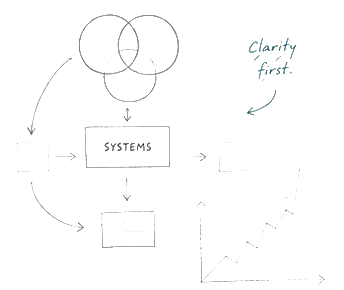
Here is the triangle I kept staring at:
| Lens |
What it seems to say |
Why it caught my attention |
| Analytic idealism |
Consciousness is fundamental, and what we call matter is the public-facing appearance of deeper mental activity. |
It refuses the usual move of treating mind as a weird late accident inside dead matter. |
| Logos theology |
The world is not self-grounding. It is made through, upheld by, and intelligible through the divine Word. |
It gives reality a structured, meaningful, world-giving center instead of a brute substrate. |
| Quantum vacuum |
The physical “bottom” is not a pile of tiny solid objects but a structured generative field with stable regularities. |
Even physics doesn't end in simple little billiard balls. The base layer already looks stranger and more formal than that. |
Those three claims are not identical. They aren't even operating at exactly the same layer. Analytic idealism is a metaphysical proposal. Logos theology is a theological and metaphysical claim. The quantum vacuum belongs to physics, which is describing publicly observable behavior, not interior being. Still, they rhyme in a way I couldn't ignore.
All three push against the same lazy picture of reality: a fundamentally dead base layer that somehow, somewhere, accidentally produces consciousness, meaning, value, and personhood later on. Once that picture starts to wobble, the question gets much more interesting than “does this sound Christian?”
What if I temporarily treat them as layered descriptions of one reality?
Suppose, just for the sake of the thought experiment, that reality is grounded in something like structured consciousness. Not your consciousness or mine, but a deeper experiential ground. Then the physical world would not be the thing that explains consciousness. It would be the thing consciousness looks like when it becomes publicly stable, shared, and mathematically describable.
That would give me a rough stack like this:
ground of being = experiential + unified + self-present + structured
physical world = public-facing, stable appearance of that structured activity
finite persons = real centers of participation within that world, not accidental glitches
If I say it that way, the quantum vacuum stops being “God in physics clothing,” which would be sloppy, and becomes something narrower and more interesting: the lowest-level physical description of the shared interface. Not the essence of the ground, but the public behavior of the ground as physics can model it.
That distinction matters a lot. Physics can tell me a great deal about regularity, symmetry, fields, and observable constraints. It cannot, by its own methods, tell me whether the ground is aware, values anything, or has interiority. So when I say the vacuum became part of the question, I don't mean the vacuum solves ontology. I mean it makes brute little-object materialism look even less like the obvious resting place.
In that sense, the older conversation helped me name the intuition more clearly: quantum field theory may be giving us the body language of the cosmos without giving us the interior life of the cosmos. That's not a proof of God. It's not even a proof of idealism. But it is a reason to ask whether our physical descriptions are describing the outside of something whose inside is richer than materialism allows.
Would a bare impersonal consciousness actually be enough?
This is where I stop being satisfied with the softer versions of the theory.
Let's grant, for a moment, that consciousness is fundamental. Fine. But what kind of consciousness? A featureless ocean of awareness doesn't seem like enough. If the world is ordered, intelligible, differentiated, mathematically stable, and full of real centers of experience, then the ground cannot just be “mind stuff.” It has to be consciousness with form. Consciousness with internal structure. Consciousness capable of sustaining distinctions without collapsing into chaos.
That is where the Logos note starts to matter. Not as a decorative Christian flourish, but as a metaphysical requirement. If the ground can give rise to intelligible worlds, relation, differentiation, and stable order, then the ground is not merely conscious. It is articulate. It is internally meaningful. It contains something like rational form. “Logos” suddenly stops sounding like religious poetry and starts sounding like a candidate name for what a consciousness-first ontology would need in order to be world-giving at all.
And on the Christian side, Logos language is doing much more than saying “God communicates.” John 1 ties the Logos to creation itself. Colossians 1 says all things hold together in Christ. Hebrews 1 says the Son upholds all things. That is not a thin symbolic claim. It is a claim that the world's intelligibility, coherence, and ongoing existence are not self-grounded. They are derivative.
So the question becomes: if consciousness is fundamental, is structure optional? I don't think it is. If structure is not basic, then the intelligibility of the world becomes hard to explain. If structure is basic, then something like Logos looks less like an add-on and more like a necessary feature of the ground.
Would relation also have to be basic?
I think this is the next pressure point. If consciousness is real, and if finite persons are real, and if the world is not an illusion but a genuine theater of interaction, then relation cannot just be a late social construction sitting on top of an otherwise solitary base. Relation has to go deep.
Why? Because awareness is already a kind of relation. To know is to differentiate. To attend is to prefer. To mean is to relate. Once I started following that thread, it got harder for me to imagine ultimate reality as a sheer undifferentiated one that only later throws off relation as an accidental side effect.
That is one reason Acts 17:28 keeps coming back into the frame for me: “in him we live and move and have our being.” Even if I bracket revelation for a moment and stay inside philosophy, the sentence lands on the same nerve. If creaturely being is real but not self-grounded, then participation starts to look more plausible than isolation.
That doesn't prove the Trinity. I want to be careful here. But it does start to put serious pressure on the idea that the deepest level of reality could be purely solitary, purely impersonal, or morally blank. If relation, meaning, and value are real at our level, then I at least have to ask whether they are downstream accidents or whether they are telling me something true about the ground itself.
This is also where I think the first draft missed my real interest. I wasn't mainly trying to ask, “Can I make analytic idealism compatible with Christianity?” I was asking something more aggressive: if relation, intelligibility, and personhood are not optional extras, then does the framework start driving me toward a more specifically Christian ontology whether I intended that or not?
Do orthodox claims merely fit this framework, or do some of them start to follow?
This is the part that still feels live to me.
Some Christian ideas seem like they might become more than compatible under this model. They begin to look like the kinds of things a consciousness-first universe would need if it were going to make full sense of itself.
| Claim |
My current read |
| Reality is grounded in mind rather than dead matter. |
This starts to look like a live metaphysical requirement, not just a religious preference. |
| The ground must be structured and intelligible. |
This feels close to necessary if the world is ordered and knowable at all. |
| Relation and value are basic, not late accidents. |
This also starts to feel essential if persons and meaning are real. |
| The ground is personal rather than impersonal. |
I don't think the case closes here, but the pressure is definitely in that direction. |
| The ground is triune in the Nicene sense. |
This does not fall out cleanly from philosophy alone, but a relational ultimate reality makes it feel less arbitrary and less exotic than it first appears. |
| The Logos is Jesus of Nazareth, crucified and raised. |
This still requires revelation and history. Metaphysics can clear space for it; it cannot derive it on its own. |
That distinction feels important to me. Some things may follow by philosophical necessity if the framework is true: consciousness isn't secondary, intelligibility isn't accidental, and relation isn't cosmetic. But the specifically historical content of Christianity still doesn't emerge just because I followed an ontology to its limit. John 1 is not reducible to a field equation. The Incarnation is not the same claim as “the cosmos is consciousness-like.”
So I find myself saying two things at once. First: a consciousness-first metaphysics may make more Christian claims feel metaphysically natural than I would have expected. Second: revelation is still doing real work. It is not just sprinkling story on top of a philosophical system that already had everything it needed.
Where does the whole model still threaten to collapse?
Several places.
First objection: am I committing a category mistake by tying ontology too closely to physics? Maybe. That's why I keep the distinction sharp. Physics describes public behavior. Ontology asks what must be true of being itself. If I collapse those, the whole thing turns into bad popular-level quantum mysticism.
Second objection: does universal consciousness erase real persons? This is where I part ways with the softer “we are all just masks of the One” versions. If finite persons are not real, then love, responsibility, moral formation, covenant, and even truth-telling start to thin out. I don't want a metaphysics that wins elegance by deleting the self.
Third objection: does evil become mere fragmentation instead of rebellion, corruption, and guilt? That is a serious Christian problem for any system that over-psychologizes the universe. If sin becomes only misperception, the biblical drama gets flattened fast.
Fourth objection: does Christ become just the clearest disclosure of cosmic consciousness rather than the eternal Son made flesh? This is still the place where I think the framework can go badly wrong if handled lazily. A consciousness-first model may make Incarnation less absurd, but it can also dissolve Incarnation into symbolism if I don't keep the Creator-creature distinction intact.
So no, I don't think the exercise licenses a quick “therefore Christianity.” But I also don't think the right response is to back away the moment the questions get sharper. The interesting move is to keep pressing until I find out which parts are structurally required, which parts are merely compatible, and which parts only arrive because God has actually revealed something that philosophy could never have invented for itself.
Where I land for now
My current synthesis is less defensive than the first draft was.
I don't think analytic idealism is interesting merely because it clears a little conceptual space around Christianity. I think it is interesting because, once I put it next to the Logos and then next to the quantum vacuum, it opens a much larger question about what kind of ground could generate a world like this one at all. The moment I ask that question seriously, I start getting pressure toward consciousness, structure, relation, value, and personhood as deep features of reality rather than superficial byproducts.
That still doesn't get me all the way to orthodox theology by reason alone. I don't think metaphysics can cough up the Gospel as a theorem. But it may do more than I first gave it credit for. It may tell me that some Christian claims are not arbitrary religious decorations laid on top of the universe. They may be very close to what a coherent consciousness-first ontology would need if it were going to account for intelligibility, personhood, and the world's strange capacity to be both lawful and meaningful.
So the question I care about now isn't “Can analytic idealism survive a quick doctrinal audit?” It is “If I let this model run all the way out, what does it force me to say about being, cosmos, persons, and God?” My current answer is that it pushes me closer to Christian metaphysics than materialism ever could, while still leaving revelation with a job philosophy cannot steal.